Kyoto in autumn: a practical guide to travelling light
Plan a calmer autumn trip to Kyoto with advice on hotel locations, neighbourhood-based days, local transport, luggage and flexible sightseeing.
Choose a hotel around your actual journey
A comfortable autumn trip to Kyoto often begins with leaving something out. Rather than racing between temples, choose one area as the focus of the day and give yourself time to walk. Breaks between sights help preserve a relaxed pace when popular streets are busy.
When comparing hotels, map the journey from the station all the way to the door. Count train changes and the distance you will need to walk with a suitcase. A cheaper room away from your main route may be less economical once transport and time are included. For a late flight arrival, confirm check-in arrangements and the airport transfer before booking.
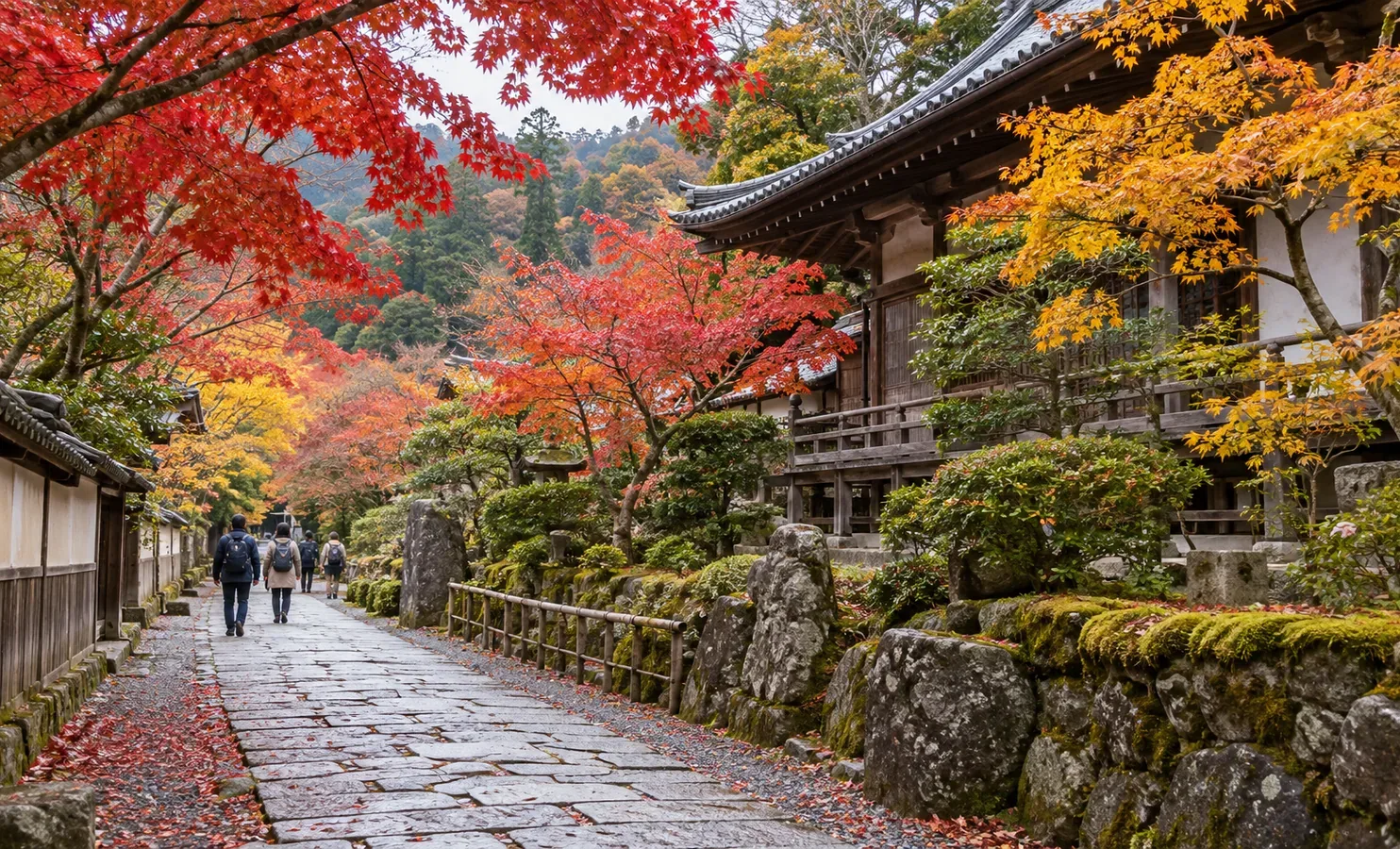
Autumn scenery rewards an unhurried walking itinerary. Illustrative image.
Explore one area at a time
Consider grouping days around Higashiyama, Arashiyama and the city centre instead of crossing town repeatedly. This is a planning suggestion, not a fixed itinerary: adapt it to your accommodation and interests. Leave an open stretch each day for a garden, café or side street that catches your attention.
Kyoto's official tourism website warns that buses can be crowded during the autumn foliage season and commuting hours. Compare rail, subway and walking options before relying entirely on buses. Transport IC cards can be used on city buses, but the coverage of each service still deserves checking.
A manageable three-day outline
With three full days, consider making Higashiyama the focus of the first: choose one main sight, explore suitable nearby streets on foot and have lunch in the same area. Add an afternoon stop only if you still have the energy. Keep an international arrival day lighter; it need not count as a full sightseeing day.
The second day could centre on Arashiyama, combining a chosen attraction with an unhurried riverside walk. Leave the third for the city centre, a little shopping and somewhere you still want to explore. This is a suggested allocation of time, not a fixed route. Opening hours, admission charges and reservation requirements must be checked separately for each attraction.
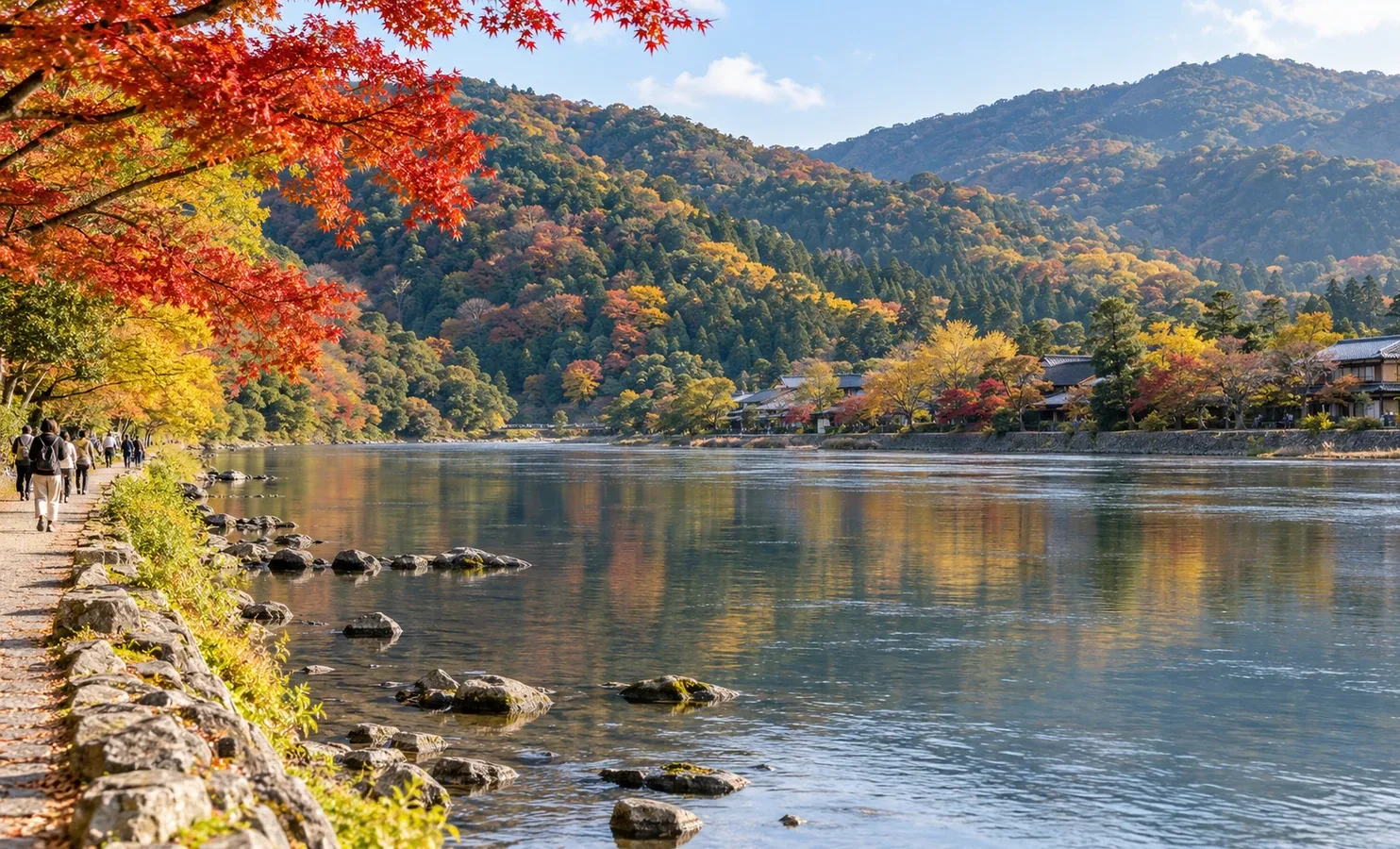
Leave time for a riverside walk instead of filling every hour. Illustrative image.
Budget for the costs that are easy to miss
Divide the budget into flights, accommodation, transport, meals and sightseeing. Add a contingency for wet weather, a taxi when tired or a change of plan. When comparing hotels, include any luggage-storage charges, breakfast if needed and daily transport rather than considering the nightly room rate alone.
For transport passes, list the journeys you genuinely expect to make and compare their individual fares with the pass price. An unlimited-travel label does not automatically make a pass good value, particularly on a day spent mostly walking. Similarly, avoid prepaying for too many activities when the weather or the group's energy level is uncertain.
Travel light and leave room for change
Leave large suitcases at suitable accommodation or luggage-storage facilities before sightseeing. JNTO also highlights luggage forwarding as a way to travel more comfortably. Ask about delivery times, collection arrangements and restrictions before using it, and keep documents, essential medication and daily necessities with you.
Layers, familiar walking shoes and a compact umbrella are useful starting points for packing. Check the forecast close to departure: foliage timing and outdoor conditions vary from year to year. When taking photographs, keep paths clear, respect restricted areas and leave space for local residents.
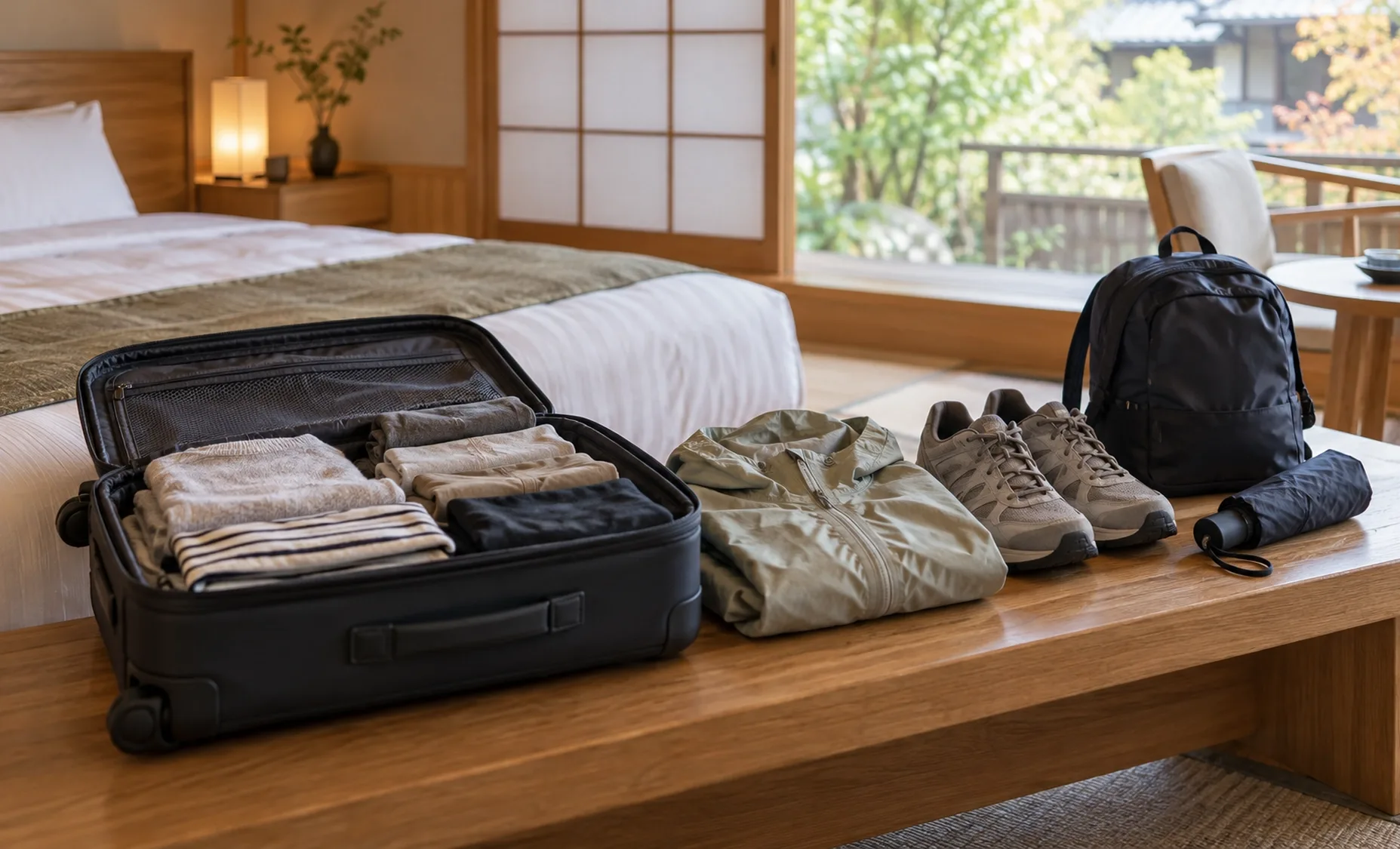
Light luggage, layers and familiar shoes make travel easier. Illustrative image.
A practical pre-departure checklist
Before departure, save the hotel's address in both Japanese and Latin script, confirm check-in hours and find out how to contact the property if delayed. Download offline maps, arrange mobile connectivity and keep tickets in one accessible folder. Carry your passport, regular medication and daily essentials in a small bag that stays with you.
Each evening, review three things for the next day: the forecast, the first transport leg and the closing time of your most important stop. Families with children or older travellers should add rest breaks and be willing to drop a sight. A slow meal, an unexpected garden or a sudden shower should have room in the itinerary.
References: Kyoto Travel · Kyoto transport · JNTO